
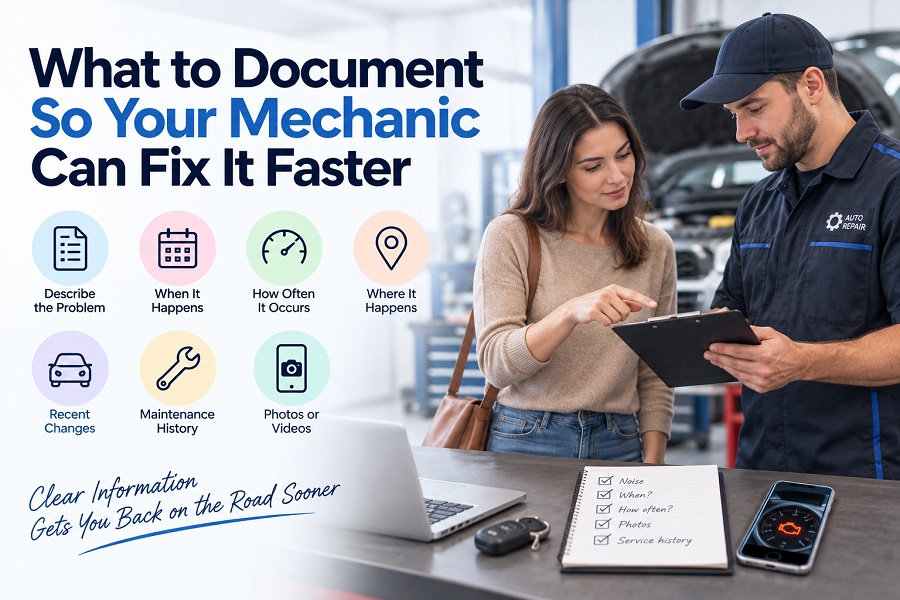
Intermittent stalling, a pulsing brake pedal, a sweet smell after shutdown, or a check engine light that flickers on and off are all helpful clues. The more specific your notes are, the easier it may be for a technician to isolate the problem and identify which components to test. Good documentation can help, especially when symptoms appear only at certain speeds, in particular weather conditions, or after the vehicle has warmed up. Here’s a practical guide to what you should look for and record before booking an appointment in Bowling Green so your technician can replicate the issue, verify the fault, and make a more focused repair.
-
Replicate the Symptom: Conditions, Speed, and How It Starts
Find out what conditions cause the problem. Note whether it occurs during a cold start or hot restart, whether the air conditioner or defroster is on, vehicle speed, throttle input, and load (e.g., going uphill, carrying passengers, or towing). If the engine stumbles after refueling, note the fuel level and where you bought fuel. If you feel a vibration between 55 and 65 mph but it goes away above 70 mph, write down the exact speed range. If the brake pulsation is worse after a long downhill drive, note the location and amount of braking. These particular details can help a technician duplicate the symptom during a road test.
When scheduling service locally, shops handling Auto repair in Bowling Green may benefit from a short timeline that includes weather conditions, vehicle speeds, and when the symptom first appeared. “It happens sometimes” is much less useful than “after a cold night, at 35 mph, with light throttle and the engine fully warmed. Include the odometer reading and whether the problem started soon after another repair, hitting a pothole, or a battery change.
-
Dashboard Lights Tell a Story: MIL, ABS, TPMS, and Temperature
The instrument cluster can give important diagnostic clues. A steady check engine light, or malfunction indicator lamp (MIL), typically signifies an emissions or drivability concern. If the MIL is flashing, it can mean a serious misfire that can damage the catalytic converter. Do not continue to drive. An ABS warning light may point to a problem with the wheel speed sensors, wiring, or braking system. A red brake warning light could mean you have low brake fluid, a problem with the parking brake, or some other braking system issue.
The TPMS warning light may indicate low tire pressure or a problem with the TPMS monitoring system. A temperature gauge that moves well above its normal range indicates overheating. When warning lights illuminate, take a clear picture of the instrument cluster. Use an OBD II scanner and record any diagnostic trouble codes it provides. Do not erase the code until a technician has inspected the vehicle. The stored codes and freeze frame data may help a technician determine the conditions that existed when the fault occurred.
-
Noises, Smells, and Vibrations: Describe the Location and Timing
Try to correlate abnormal noises to vehicle speed, engine speed, steering input, braking, or road conditions. If you hear a clicking noise that speeds up with the speed of the wheel in slow turns, it could be a CV axle or some other rotating part. A clunk over bumps might be steering or suspension parts. Depending on the vehicle, the squealing noise that you hear when turning the steering wheel at idle can come from a belt, pulley, or steering system component.
If you hear metal grinding when you brake, the brake parts are badly worn and should be inspected right away. Smells are helpful hints, too. A sweet smell could mean coolant, a strong fuel smell could mean a fuel or vapor system problem, and a burning rubber smell could mean a slipping belt or other overheated component.
Vibrations can also help you pinpoint the problem. Vibration in the highway-speed wheel or steering wheel can come from tire balance, wheel damage, or suspension problems, while vibration felt in the seat may come from other parts of the car. You might get brake shudder during light braking for many reasons, such as uneven rotor surfaces and pad deposits.
Imagine a real-life situation. You hit a deep pothole and now, driving at about 25 mph, you hear a rhythmic thumping from the right rear. You look and see a bulge in the tire sidewall. That information helps the shop determine which tire and wheel to check first, and whether to check the nearby suspension components for damage. Putting off a repair for an unusual noise or vibration until it worsens can turn a small problem into a more expensive repair.
-
Fluid Spots and Quick Checks You Can Do Safely
If you think you leak, park the vehicle and lay a clean piece of cardboard underneath it overnight. Estimate the location, color, and consistency of any fluid. Depending on the vehicle, coolant may be green, orange, pink, or another color. Engine oil can vary from amber to dark brown or black. Transmission fluid: Transmission fluid is red or brown, but fluid colors will vary by manufacturer and age. Normal condensation is usually clear water on the passenger side after you’ve been running the air conditioner.
Check coolant only when the engine is completely cool to avoid burn risk. If the vehicle has a dipstick, check the engine oil level. If the red oil-pressure warning light comes on, the engine temperature climbs into the danger zone, or the brake pedal suddenly goes down toward the floor, don’t drive. These conditions may signal serious mechanical or safety problems that may require towing rather than driving.
-
Bring Evidence and Context to the Appointment
Short video clips and clear photos can help out a lot. Record a short clip of a chirp, clunk, whine, or other unusual sound with the radio off and with as little background noise as possible. First, take a picture of the area where the leak starts, not just the puddle on the floor.
Provide an easy-to-read record with dates, weather conditions, fuel info (if relevant), and any trend you have observed. Have recent maintenance records available for spark plug replacement, battery or alternator service, brake repairs, transmission maintenance, etc. Please leave the wheel lock key (if any) and key fobs that the technician may need. Delete any superfluous cargo that may block access to areas to be inspected.
List any aftermarket electronics, such as remote start systems, dash cams, audio equipment, or other accessories. Technicians need to know what has been added to the vehicle because electrical modifications can sometimes cause battery drain, blown fuses, or other intermittent electrical problems.
Give Your Mechanic Better Clues From the Start
Good information can speed diagnosis and make repairs more predictable. You log the exact circumstances of when a problem occurs, dashboard alerts, odd noises, odors, vibrations, and leaks, and you provide the technician with a much better jumping-off point.
Intermittent problems are hard to duplicate, but a detailed log can help a technician confirm the problem during a road test or a focused diagnostic procedure. With a bit of preparation, you can reduce unnecessary parts replacement and service trips. The result is a more efficient diagnostic process, a safer vehicle, and fewer surprises when you pick up your car after service in Bowling Green.
