
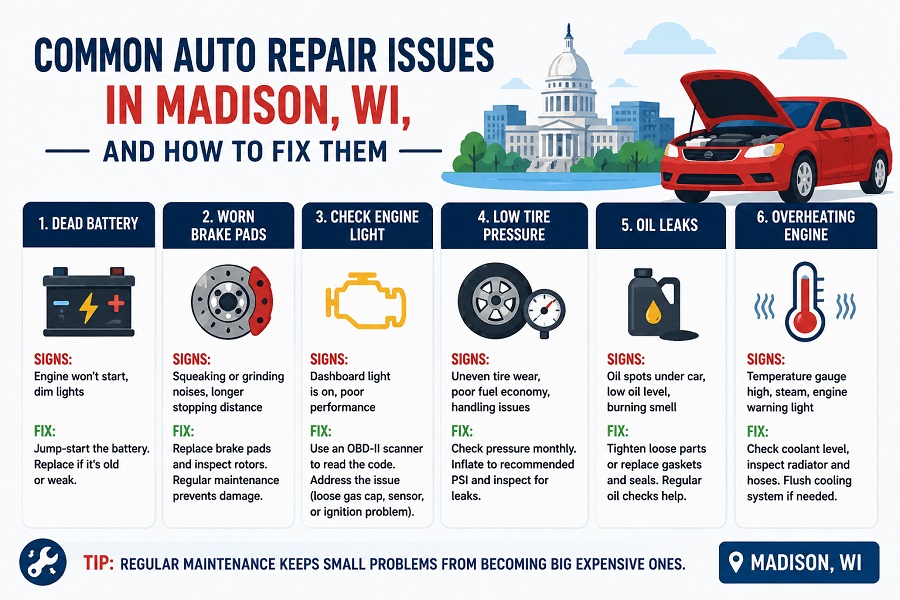
Driving in Madison, WI, can be hard on vehicles because the weather, road conditions, and seasonal changes all influence how a car performs. Batteries can die in the cold; road salt accelerates corrosion; potholes can damage tires and suspension components; and summer heat can tax cooling systems. Most repair issues start with small warning signs that drivers can miss amid their busy lives. Knowing the most common auto repair problems can help you react faster, avoid unexpected breakdowns, and make your vehicle safer for getting around to work, running errands, taking kids to school, and even longer trips all year long.
What Drivers Should Watch
- Battery Failure During Cold Weather
Cold weather makes it harder for a car battery to deliver power, so one of the most common car problems in cold climates is battery trouble. In winter in Madison, a battery that’s good in mild weather can suddenly become a dud when temperatures drop. Signs of a dying battery include slow cranking, dim lights, clicking, flickering dash lights, or a car that won’t start after sitting overnight. The fix starts with a battery test to determine charge level and overall condition. If the battery is low, it may need to be replaced before it dies. Drivers looking for auto repair in Madison, WI, looking for auto repair may often deal with winter starting problems caused by aging batteries, corroded terminals, or charging system trouble. Cleaning battery terminals, checking the alternator, and making sure cables are tight can also prevent no-start situations. Replacing a battery before deep winter can save time, stress, and towing costs.
- Brake Wear From Stop-and-Go Driving
Brake problems are also common as you’re always putting pressure on pads, rotors, calipers, and brake fluid while you’re daily driving. Drivers in Madison may encounter frequent traffic stops, wet roads, winter slush, and salt exposure – all of which can affect braking performance. Warning signs include squealing, grinding, vibrations, a soft pedal, pulling to one side, or a longer stopping distance. A squeal sometimes indicates a worn brake pad. And sometimes a squeal indicates that the pads are already too worn and that the rotors are being damaged. The fix depends on the inspection results. You may need to replace the pads, resurface or replace the rotors, and clean or repair the calipers if they are sticking. Also, check the brake fluid, as old or contaminated fluid can affect pedal response. Early detection of brake problems improves safety and prevents minor brake pad wear from escalating into a more expensive rotor or caliper repair.
- Tire Damage, Potholes, and Alignment Trouble
After winter, tire and alignment problems are very common, as freezing, thawing, and plowing can make for less-than-smooth roads. Potholes can bend rims, damage tires, and knock wheels out of whack. Drivers might notice a steering wheel that pulls to one side, vibration at highway speeds, uneven tread wear, or a vehicle that feels less stable than normal. The cold weather also tends to lower your tire pressure, since air contracts with cold. The repair starts with an examination of tire pressure, tread depth, sidewall condition, and wheel balance. If the vehicle pulls or the tires wear unevenly, it needs an alignment. If a tire’s sidewall is bulging, cracked, or cut, the tire might need to be replaced. Rotating your tires regularly helps to extend tread life and promotes more even wear. Madison roads can change quickly from dry pavement to snow, ice, rain, or rough patches, so properly maintained tires and proper alignment are important for control, fuel economy, and safe braking.
- Cooling System and Overheating Concerns
Even in a cold city, a cooling system problem can occur in any season. Your vehicle still requires coolant to regulate engine temperature, prevent freezing, and protect parts from corrosion. Common signs include a rising temperature gauge, a sweet odor, coolant puddles, heater problems, and steam or low-coolant warnings. The engine can overheat if the hose is leaking, the radiator is worn, the thermostat is failing, the water pump is weak, or the pressure cap is damaged. The repair starts with checking the coolant level and inspecting for leaks with the engine cool. A pressure test can reveal hidden leaks in hoses, the radiator, or the water pump area. It is also important to flush the coolant at the proper intervals, as it ages, it loses its protective qualities. Ignoring trouble with the cooling system can damage gaskets, seals, and engine parts. In Madison, it is important to use the proper coolant mixture so the engine is protected against freezing temperatures in the winter and can still maintain proper temperature control during summer driving and traffic delays.
- Check Engine Lights and Rough Running
A check engine light can indicate many different issues, which is why guessing often results in wasted money. The light might be a loose gas cap, an oxygen sensor issue, an ignition misfire, a fuel system problem, a vacuum leak, or an emissions concern. Drivers may also experience rough idling, poor fuel economy, hesitation, shaking, or a strong fuel smell. The fix should start with a diagnostic scan, but the code alone is just the beginning. A technician should test the relevant components to confirm the real cause before replacing anything. For example, spark plugs, ignition coils, fuel delivery issues, compression issues, or wiring problems can cause a misfire code. Fixing the wrong piece of equipment may not solve the problem. Many check engine problems can be avoided with regular maintenance, including replacing spark plugs, changing air filters, cleaning the fuel system as needed, and changing oil on time. Early response also prevents catalytic converter damage from ignored misfires.
- Rust, Exhaust, and Undercarriage Wear
Road salt is a good thing to have for winter driving, but it can be tough on a vehicle’s undercarriage. Over time, salt and moisture can cause rust to form on brake lines, exhaust parts, suspension components, fasteners, and body panels. Drivers may notice a rattling sound under the car, exhaust fumes, a louder engine noise, or rust buildup near the wheel wells and lower panels. The fix depends on the extent of the damage. Exhaust leaks may require replacing the gasket, pipe, muffler, or hanger. Rusted brake or fuel lines are a safety hazard and should be addressed immediately. In winter and spring, washing the undercarriage helps remove salt before it can sit too long. Inspections are also useful because corrosion can be hidden until it weakens a part. Madison cars that have been through years of snow and salt should be checked regularly underneath. Braking, steering, exhaust flow, and the vehicle’s long-term condition can all be protected by early rust detection.
Small Repairs Prevent Bigger Problems
Weather, road salt, potholes, traffic, and normal wear usually cause Madi repair problems. But in Madison, WI, ignoring battery failure, brake wear, tire damage, overheating, warning lights, and rust can make them more serious. The right response is to act on early warning signs rather than wait for a breakdown. Routine inspections, fluid changes, tire care, brake service, battery testing, and seasonal maintenance help keep the vehicle prepared for changing road conditions. A well-cared-for car is safer, more reliable, and less likely to leave you stranded on your busy daily travels.
