
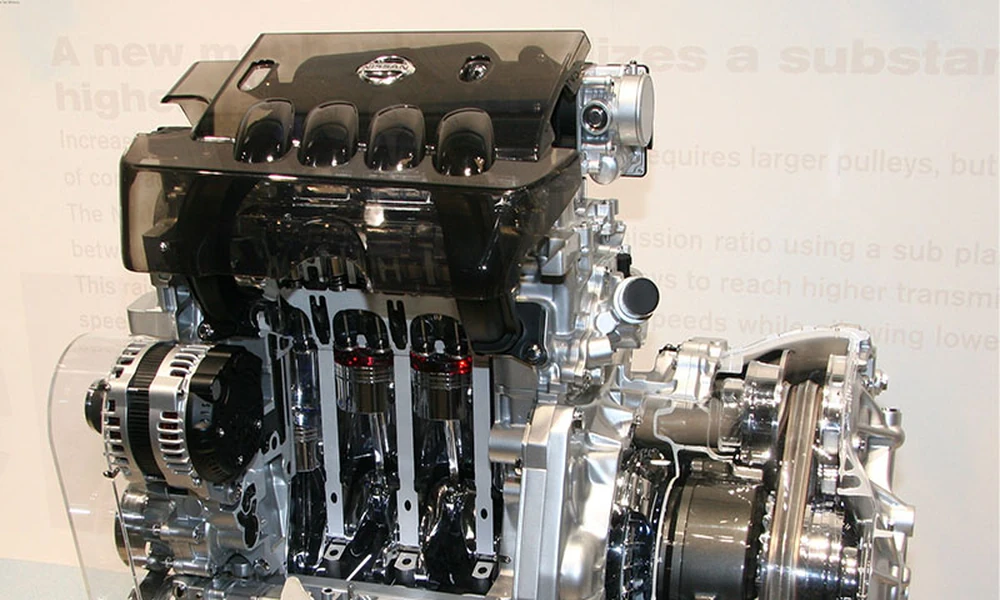
Nissan occupies a special place in car culture. The company built engines that became the backbone of the tuning scene, motors so responsive to modification and so widely swapped that entire communities formed around them. At the same time, Nissan produced dependable everyday engines that quietly kept millions of commuters moving. Whether you are a builder chasing a specific platform or a driver who needs a reliable replacement, it pays to understand what Nissan offered and why these engines remain in such demand.
The Four-Cylinder That Defined a Generation
If one engine represents Nissan’s tuning heritage, it is the SR20. This 2.0-liter four-cylinder came in several forms, but the turbocharged SR20DET is the one enthusiasts revere. It combined a strong bottom end, excellent aftermarket support, and a size that let it fit into a huge range of chassis. The result was an engine that became the default swap for anyone wanting affordable, tunable power.
Part of the SR20’s enduring appeal is its balance. It responds eagerly to modification but remains reliable when built sensibly, and its compact dimensions make it a natural fit for lightweight cars. Decades after its introduction, it is still one of the first engines mentioned when the conversation turns to accessible performance swaps. The naturally aspirated versions, while less glamorous, offer much of the same durability for those not chasing forced induction.
The Legendary Inline-Sixes
For those who want six cylinders, Nissan’s RB family looms large. The RB26DETT, a 2.6-liter twin-turbocharged inline-six, powered the most iconic Skyline models and became one of the most celebrated performance engines ever built. Its combination of individual throttle bodies, robust construction, and immense tuning potential turned it into a legend that commands respect and premium prices to this day.
The broader RB family extended well beyond that halo engine. Units like the RB25DET offered much of the character and tuning potential in a more attainable package, becoming favorites for swaps into a variety of chassis. The inline-six layout delivers a smoothness and a sound that four-cylinders simply cannot match, and the RB engines built a devoted following because of it.
The V6 Workhorse
Nissan’s VQ series deserves recognition as one of the most successful V6 families in the industry. Praised for years as a benchmark six-cylinder, the VQ powered a wide range of sedans, coupes, and crossovers. It delivered a strong blend of smoothness, power, and dependability that made it a staple of Nissan’s lineup for a long stretch.
For buyers who want a proven six-cylinder without the exotic reputation and cost of the RB engines, the VQ is a compelling option. It offers real performance in a package designed for everyday reliability, which is a large part of why it appeared in so many vehicles. As a replacement engine, it represents a dependable choice for owners of the many cars that used it.
The Everyday Engines That Rarely Fail
Beyond the celebrated performance units, Nissan built a large catalog of ordinary engines that simply do their job for years. These are the motors found in commuter sedans and economy cars, the ones that ask for little beyond regular maintenance and reward that care with long service. They lack the glamour of the turbocharged legends, but for the driver who just needs their car running again, they are exactly the right answer.
Replacing a tired everyday engine with a low-mileage import can be one of the most cost-effective ways to extend a vehicle’s life. The appeal here is straightforward: a dependable unit at a reasonable price that gets you back on the road without the expense of a rebuild.
Why Imports Are So Popular
A great many of these Nissan engines, from the coveted RB26 to the humble commuter fours, are sought after specifically as imports from Japan. The reason lies in Japan’s strict vehicle inspection regime, which pushes owners to retire vehicles earlier than drivers elsewhere typically would. Engines removed from these cars often carry impressively low mileage relative to their age, which is a major advantage for anyone installing one.
For builders, importing also grants access to engines and variants that were never officially sold in other markets, including some of the most desirable performance units. For everyday drivers, it means a low-mileage replacement at a fair price. Suppliers that maintain a broad Nissan JDM engine selection focus on sourcing, inspecting, and shipping these units so buyers can locate the exact engine code their project requires.
Practical Considerations for a Nissan Swap
Enthusiasm for a particular Nissan engine should be tempered with a bit of practical planning, because a swap involves more than the engine itself. Wiring and engine management are often the trickiest part of a Nissan swap, particularly with the performance units. The factory harness, ECU, and sensors need to work together, and mismatches here cause more headaches than mechanical fitment ever does. Sourcing the correct supporting components alongside the engine makes the whole project smoother.
Mounting and drivetrain compatibility also deserve early attention. An engine may physically fit a chassis while still requiring custom mounts, a different transmission, or modified accessories. Cooling capacity, exhaust routing, and fuel delivery all scale with power, so a high-output engine may demand upgrades elsewhere in the car. None of this should discourage a determined builder; it simply means the engine is the starting point of a project rather than the whole of it. Buyers who plan for the supporting pieces up front avoid the stalled builds that frustrate so many first-timers.
Matching the Engine to Your Goal
The right Nissan engine depends entirely on what you are trying to accomplish. A builder wanting an affordable, endlessly supported turbo four looks to the SR20DET. Someone chasing the ultimate inline-six experience targets the RB family, budget permitting. A driver who wants a smooth, reliable V6 finds it in the VQ. And an owner who simply needs their commuter running again is best served by the dependable everyday engine that matches their chassis.
Two principles apply no matter which route you take. First, verify compatibility by engine code, because Japanese-market units do not always bolt directly into export chassis without additional considerations. Second, buy from a supplier who inspects units and backs them with a warranty. Even the most legendary engine needs to arrive in sound condition, and that depends on careful sourcing and honest testing.
The Lasting Draw
Nissan’s engines earned their reputation through a rare combination of tunability and dependability. The performance units gave enthusiasts platforms they could build almost without limit, while the everyday motors quietly proved their worth over hundreds of thousands of miles. That dual legacy is why Nissan engines remain in constant demand, sought by builders and daily drivers alike.
Whether your goal is a record-chasing build or simply a car that starts every morning, there is a Nissan engine suited to the task. Understanding the options, and sourcing your chosen unit with care, is how you turn that heritage into a car you can rely on for years to come.
